Guides · How to study
How to study for the civics test in the time you actually have
Fix your version, learn topics instead of numbers, fill in your state answers, pick one answer per question and practice out loud.
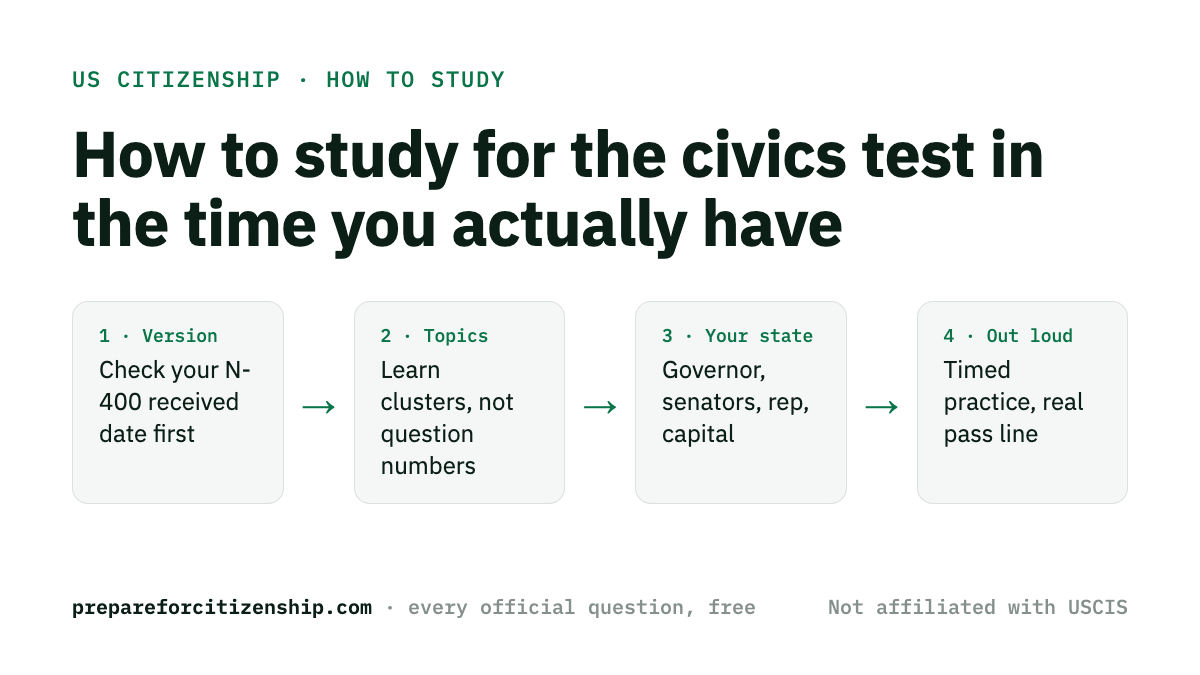
The default way to study for the civics test is to open the official list at question 1 and work down. It is also the slowest way, and for most people it is why the last forty questions never quite stick. Here is a method that works in the weeks between the interview notice and the interview.
Step 1: fix your version before you learn a single answer
Which test you take depends on when USCIS received your N-400. Before October 20, 2025: the 2008 test, 100 questions. On or after: the 2025 test, 128 questions. The date is on your I-797C receipt notice. People have spent months on the wrong list. Ten seconds here saves all of that. The two versions, side by side.
Step 2: learn topics, not numbers
The questions are not 128 separate facts. They cluster into a small number of topics: the Constitution and what it does, the three branches and who runs each, rights and amendments, the colonial period and independence, the 1800s, the 1900s, geography, and symbols and holidays.
Study one cluster at a time until it holds together as a story, then move on. When you understand that the Constitution sets up three branches and each branch checks the others, five or six questions answer themselves. When you know the Declaration was 1776 and the Constitution was 1787, the dates stop being random.
Step 3: fill in your state answers early
Four questions depend on where you live: your governor, one of your US senators, your US representative, and your state capital. No generic list has these right for you, and they change after elections. Look them up on the primary sources and check them again the week of the interview. The state questions, including DC and the territories.
Step 4: pick one answer and drill it
Many questions accept several answers and you need only one. Do not try to memorize every accepted answer. Choose the one that comes most naturally to you and make that your answer, every time. Consistency beats coverage. How the answer key works.
Step 5: practice in the real format, out loud
The officer asks spoken questions and stops as soon as you have passed: 6 right on the 2008 test, 12 on the 2025 test. Practice that way. Take timed practice tests with the real question count and the real pass line, and answer out loud rather than in your head. The interview is a spoken test, and the first time you hear the questions spoken should not be in the interview room.
Step 6: use your results, not your feelings
After each practice test, look at which topics you missed and go back to those clusters only. Do not restart from question 1. A readiness figure is only useful if it comes from tests you actually took, so ignore any app that shows you a score before you have answered anything.
A realistic schedule
Three weeks is comfortable for most people: one week on government, one on history, and one on rights, geography, symbols and practice tests. With one week, do steps 1, 3, 4 and 5 and study the topics you miss most. With one day, do the practice tests and learn your state answers.
Frequently asked questions
How long does it take to study for the US civics test?
Three weeks is comfortable for most people: one week on government, one on history, and one on rights, geography, symbols and practice tests. With less time, fix your version, learn your state answers, pick one answer per question and take practice tests.
Should I memorize every accepted answer to a civics question?
No. For questions that ask for one thing, one accepted answer is a full mark. Choose the answer that comes most naturally to you and give it every time.
Study the official questions, free
Both versions of the civics test, the answers for your state, and practice tests in the real format with the real pass line.
Prepare for Citizenship teaches the test; it does not advise on applications. Anything about your own case belongs with your lawyer or USCIS. Spotted something wrong? Tell us.